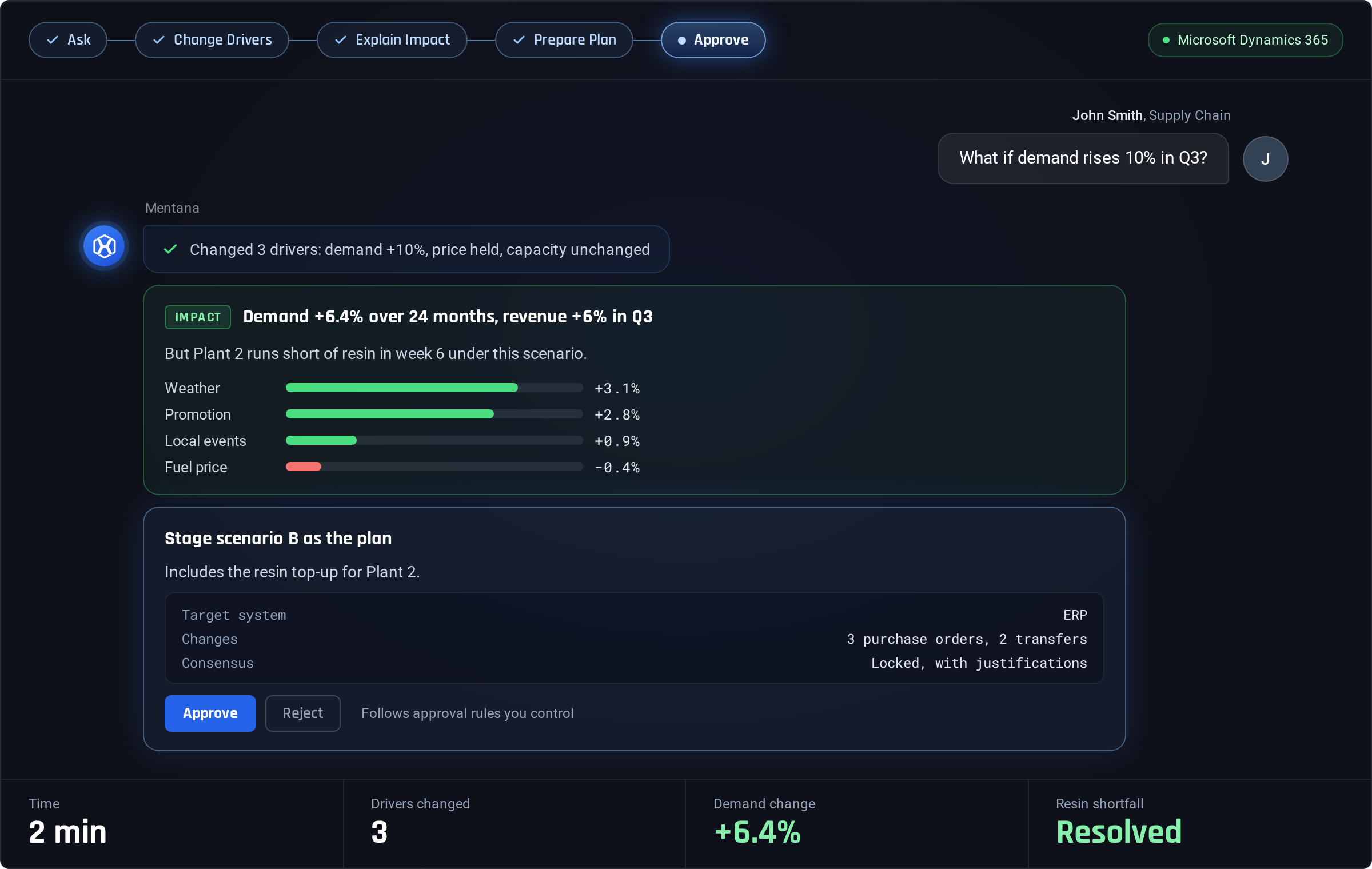
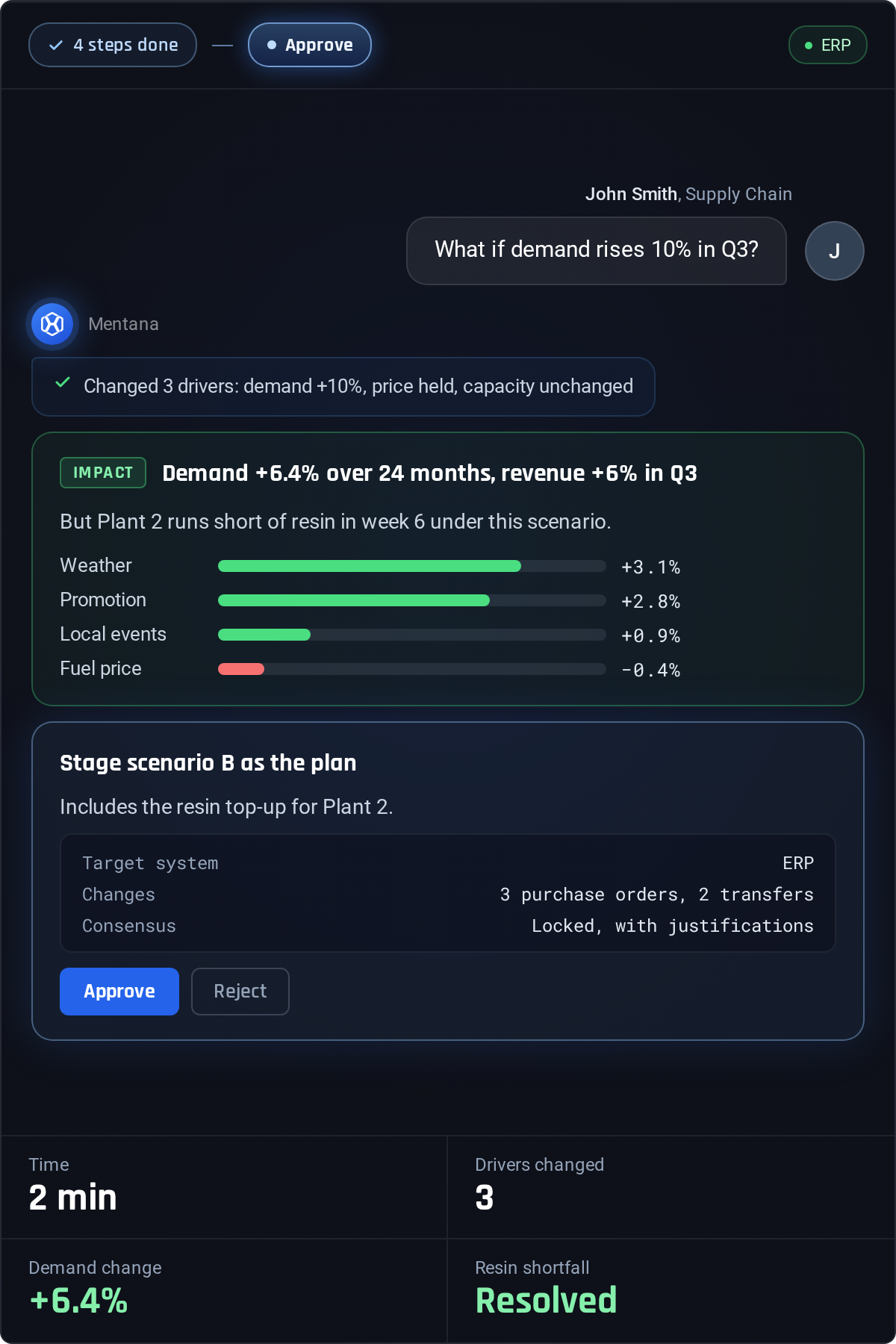
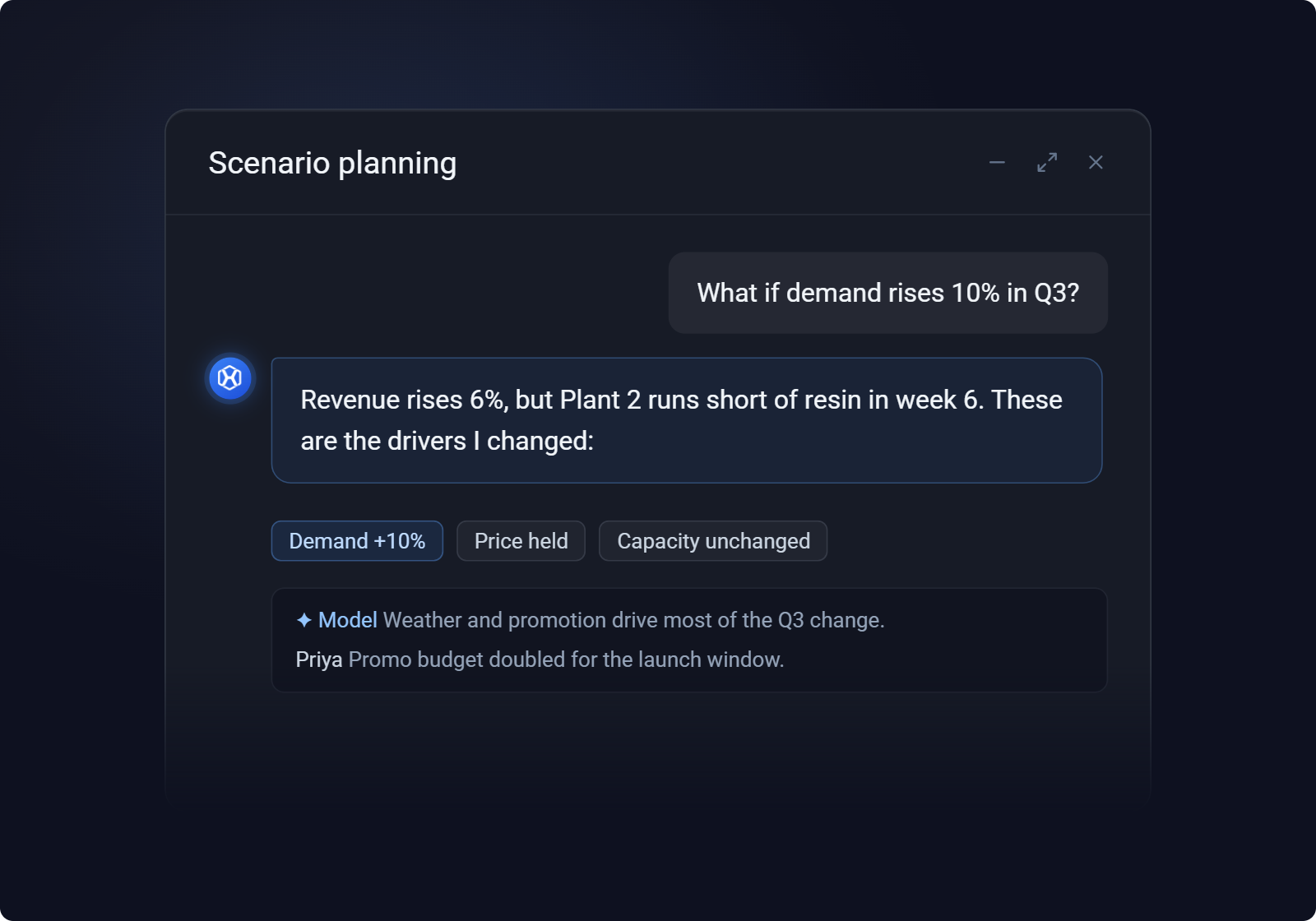
Supply chain scenario planning tests how changes in assumptions, such as weather, promotions, pricing or supplier delays, would affect demand before you commit to a plan. Mentana lets planners run these what-if scenarios in plain English against live ERP data and compare results side by side.
A demand forecast predicts the most likely outcome. Scenario planning tests alternatives to it. In Mentana, every scenario starts from your baseline forecast, so you can see how a hotter summer, a smaller promo budget or a late supplier would change demand, period by period.
You can test any assumption behind your demand forecast. That includes weather, promotions, pricing, holidays, competitor activity, supplier delays and external signals like foot traffic or local events. Scenarios can apply to a single SKU and store, a category or region, or a specific customer.
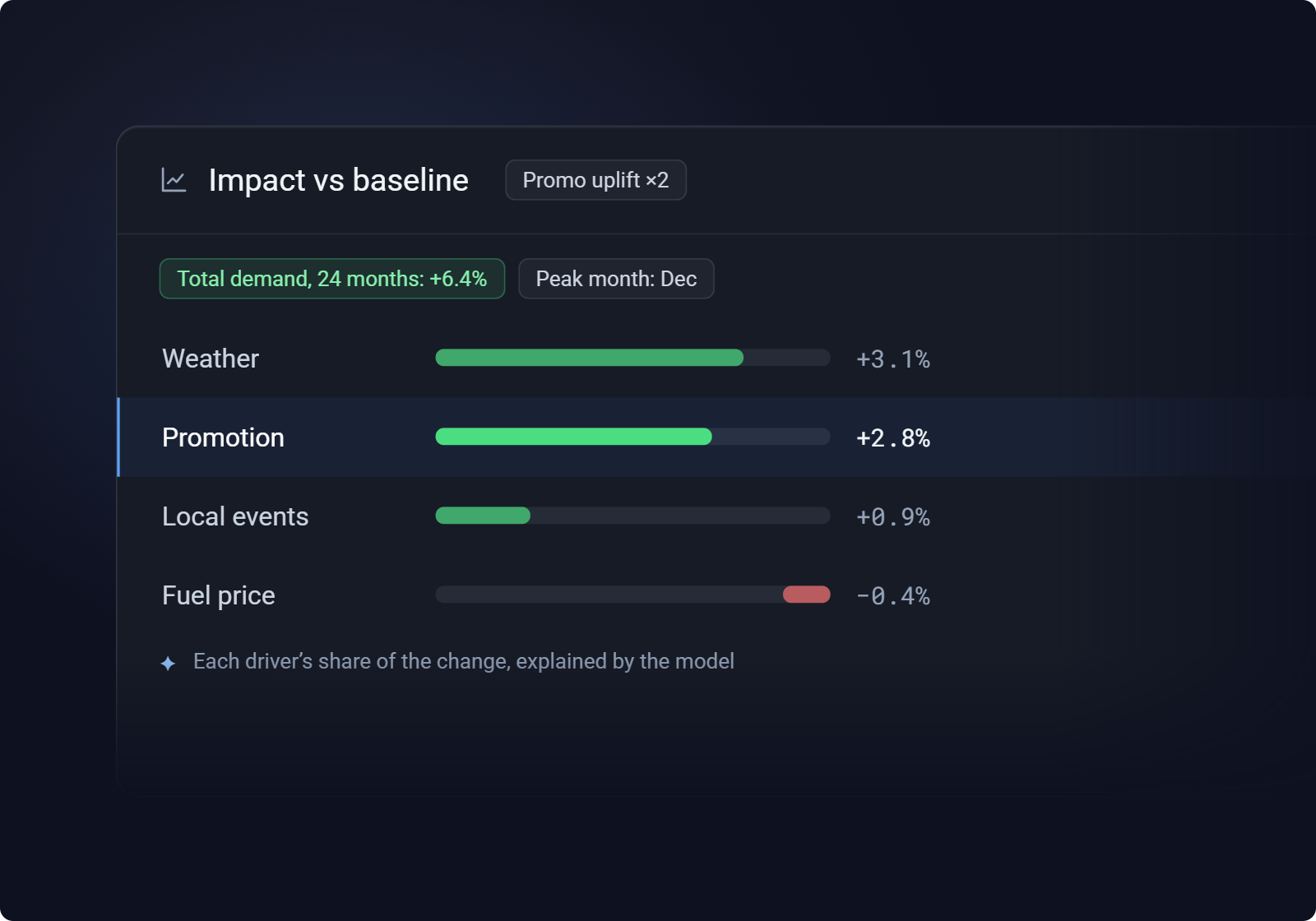
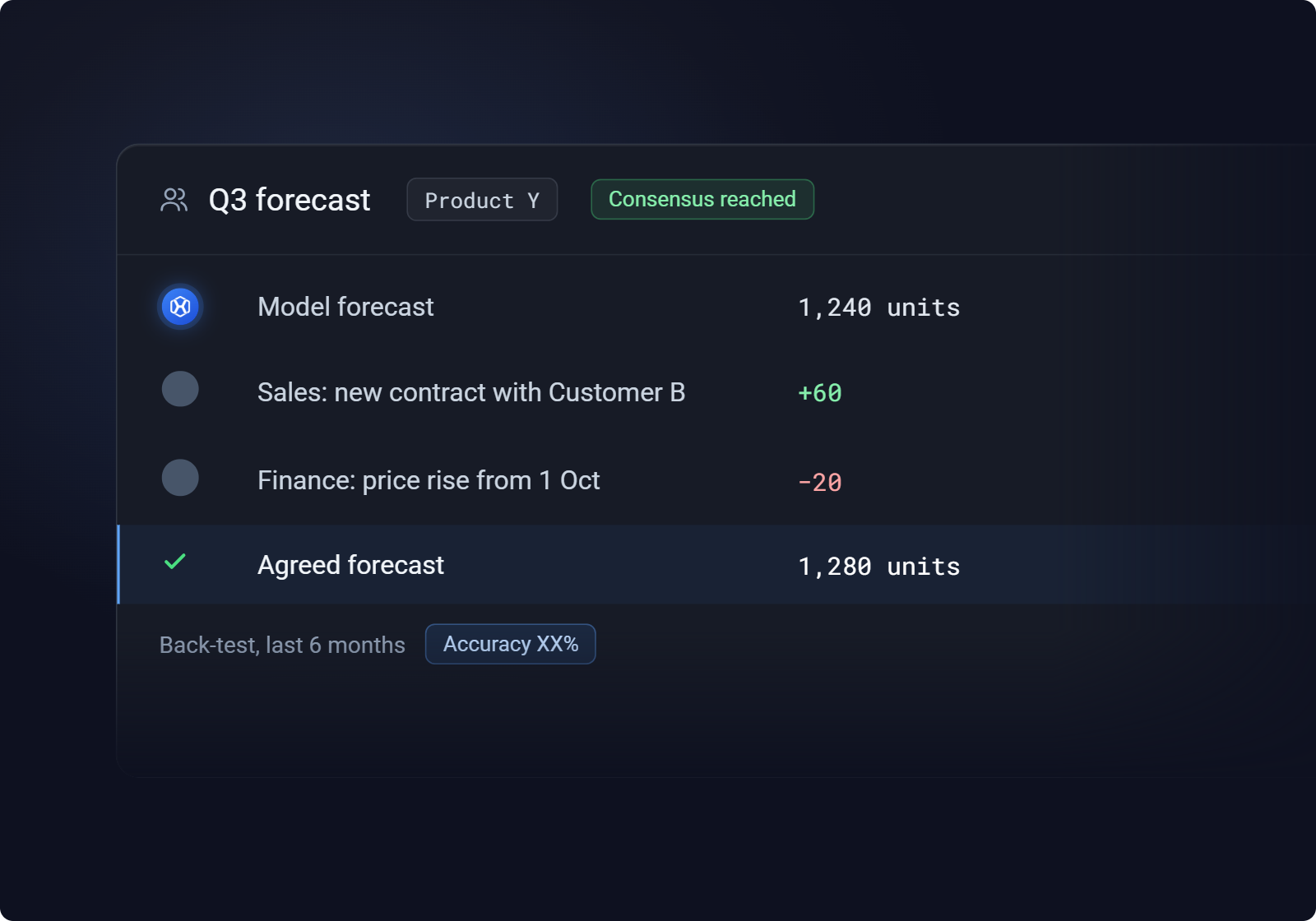
Every driver in a Mentana scenario shows its impact period by period, with a plain-English explanation from the model. Planners can add their own justification for each assumption, so anyone reviewing the forecast can see what moved the number and why.
Mentana back-tests every locked scenario against actual demand as it comes in. Planners can see which assumptions held up and which didn’t, and use those lessons to improve the next planning cycle.
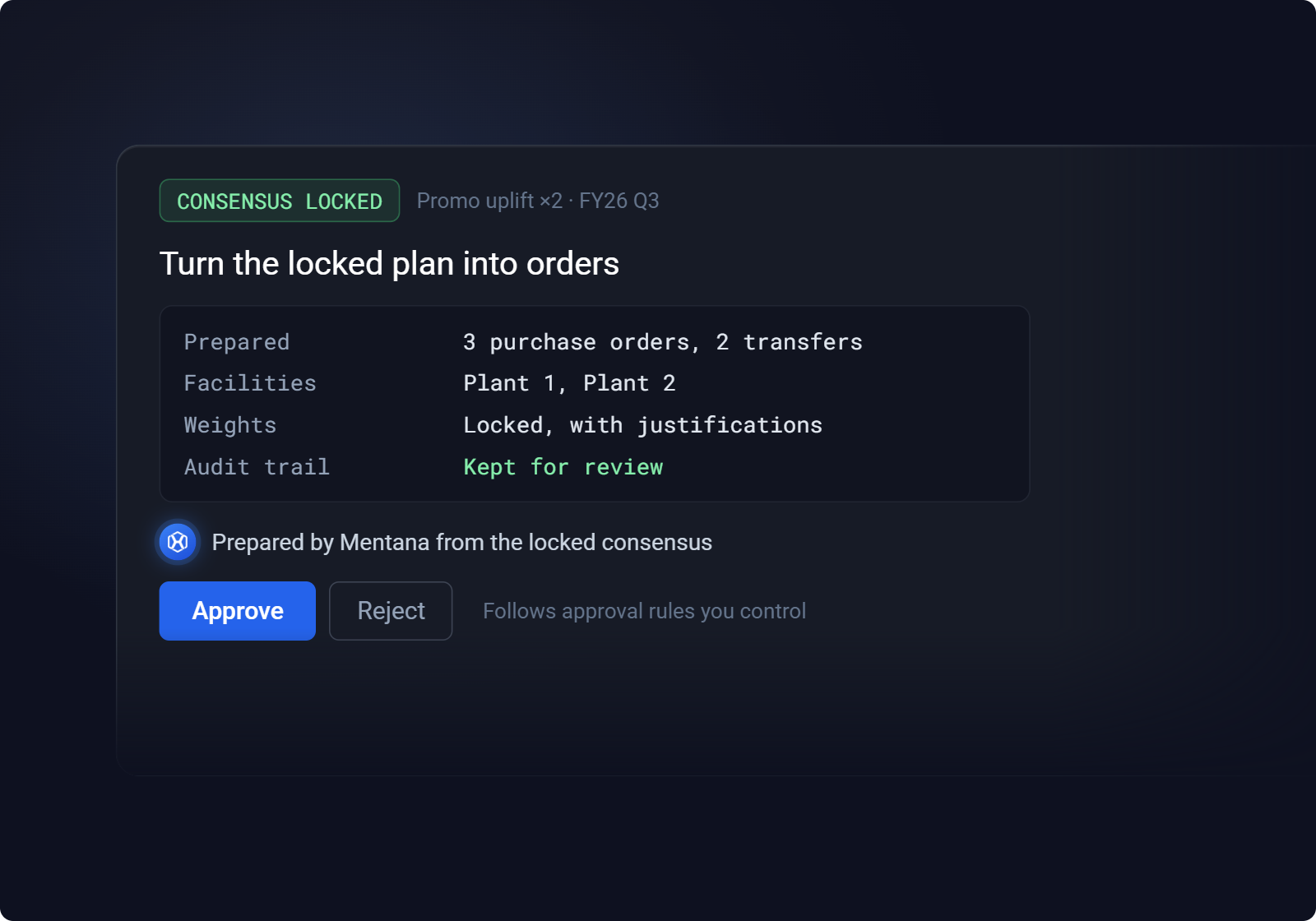
No. Mentana prepares the actions an agreed plan needs, such as purchase orders, stock transfers and replenishment changes. Nothing is written to your ERP until a planner approves it, and every action is recorded for audit.
Mentana works on top of your existing ERP, including SAP S/4HANA, Oracle NetSuite and Microsoft Dynamics 365, as well as POS, WMS and data warehouses. Your ERP remains the system of record. Mentana adds the planning and execution layer without replacing it.